
Influencer marketing: complete guide for brands
Influencer marketing is now one of the most proven channels in a brand marketer's toolkit. More than 80% of consumers have purchased or considered purchasing a product after seeing an influencer post about it, according to Forbes. That is not a niche signal. That is a channel shift.
This guide covers what influencer marketing is, why it outperforms traditional advertising, how to choose the right creator tier, how to run a campaign step by step, how to measure ROI, and when a platform makes the difference.
What is influencer marketing and how does it work?
Influencer marketing is a channel where brands partner with creators who have an established, trusting audience to promote products or services. Unlike traditional advertising, the message comes from a person the audience already follows and trusts, not from the brand directly.
The mechanics are straightforward. A brand develops a campaign brief, identifies creators who match their product and audience, agrees on deliverables and compensation, the creator produces content and posts it, and the audience sees it as organic content in their feed.
What separates influencer marketing from a standard ad buy is the trust layer. Audiences follow creators for a reason. When that creator recommends a product, it carries the weight of a personal referral, not a banner ad. That trust is what drives the performance numbers that have made influencer marketing the fastest-growing channel in digital marketing.
Why brands choose influencer marketing over paid ads
Banner blindness is real. Ad blocking software is widespread. And even when traditional digital ads reach their target, they land in an environment where audiences have trained themselves to ignore them.
Influencer marketing works differently because the content looks and feels like the rest of the feed. It arrives from someone the viewer already wants to hear from.
A few reasons brands are shifting budget here:
Trust economics. 69% of consumers trust influencers, friends, and family over information coming directly from a brand, according to Creator.co data. Paid ads do not carry that trust signal, no matter the creative quality. Cost efficiency at the micro tier. Micro-influencers (10K to 100K followers) deliver 60% higher engagement rates than macro-influencers at a fraction of the CPM, according to Creator.co campaign data. Brands that spread budget across 20 micro-creators consistently outperform a single macro-influencer buy. Content that keeps working. A creator post does not turn off when the campaign budget runs out. It continues accumulating views, saves, and shares for weeks or months after posting. That long-tail distribution is something paid ads cannot replicate. Market momentum. Goldman Sachs Research projects influencer marketing spend will double to $480 billion by 2027. Brands are following audience attention, and audience attention has moved to creator content.For a deeper look at how creator content powers this channel, see our guide on what is UGC and how it works for brands.
Types of influencer tiers: which one is right for your brand?

Choosing the right creator tier is one of the most consequential decisions in campaign planning. Get it wrong and you either overpay for reach you do not need, or you run a niche campaign at a scale too small to matter.
Here is how each tier performs:
Nano (1K to 10K followers). The highest trust per follower. Nano creators typically have hyper-engaged local or niche audiences. They are cost-effective, often working on a product-only or low-fee basis. Best for local campaigns, community building, or testing messaging in a specific category. Rates: approximately $100 to $700 per post. Micro (10K to 100K followers). The best engagement-to-cost ratio in the market. Micro-creators have built loyal audiences around specific interests: fitness, beauty, parenting, food, outdoor. Their sponsored content performs closer to organic because their audiences trust their recommendations. Rates: approximately $150 to $3,000 per post depending on platform and niche. Mid-tier (100K to 500K followers). Broader reach with a more credible, established profile. Mid-tier creators produce high-quality content and can generate significant organic distribution. Best for product launches, seasonal campaigns, or brands entering a new category. Rates: approximately $1,000 to $15,000 per post. Macro and Mega (500K+). Reach at scale. These creators are best for brand awareness campaigns where the goal is maximum impressions across a broad demographic. ROI tracking becomes critical here because you are spending more per post. Rates: $8,000 to $50,000+ per post. How to match tier to goal:- Awareness at scale: macro or mid-tier
- Engagement and community: micro
- Conversions and sales: nano and micro
- Category credibility: mid-tier
Find your creator shortlist, free
London AI searches 270K+ vetted creators, audits every profile, and builds your shortlist in under 3 minutes. No credit card required.
Find creators freeHow to run an influencer marketing campaign step by step
Running a campaign well is not complicated, but each step affects the next. Here is the sequence that consistently produces results.
Step 1: Define the campaign goal. This determines everything else: which creators you choose, what content you brief, which metrics you track. Common goals include brand awareness, engagement and community growth, website traffic, and conversions or sales. One campaign, one primary goal. Step 2: Set a realistic budget. Use the tier benchmarks above to calculate how many creators you can activate. A $10,000 budget can buy one macro post or 10 to 20 micro-creator posts. In most cases, the 10 to 20 micro posts deliver higher engagement and more diverse content. Step 3: Find and vet creators. Engagement rate matters more than follower count. Look for: consistent posting behavior, audience comments that feel genuine, and a history of brand content that fits naturally into their feed. Three red flags to screen for: fake followers (high count, low engagement), engagement pods (the same accounts commenting repeatedly), and a feed that is more than 30% sponsored content."Before Creator.co, recruitment was taking up most of my work week," said Reagan Anthony, Marketing Coordinator for Influencer and Affiliate at Groupon. "Having a system helped cut that time significantly and allowed me to focus on managing the campaign."
Want to see rigorous vetting in practice? Our influencer vetting report walks through how we scored 326 beauty creators down to a shortlist by content fit, including the great creators we parked because they did not match the campaign.
Step 4: Brief creators clearly. A vague brief produces generic content. For a full breakdown of how to brief creators effectively, see our guide on user-generated content and how brands use it. Provide brand guidelines, key messages, required disclosures, deliverables, and deadlines. Allow creative freedom within those boundaries. Creators who can interpret a brief in their own voice produce content that performs better. Step 5: Approve content, post, and track. Review content for brand alignment and FTC compliance. Once live, track performance against the goal you set in Step 1, not a list of every metric available.Brands using a platform report saving 15 to 20 hours per campaign versus managing the workflow manually, according to Creator.co platform data.
Influencer marketing ROI: how to measure what matters
The most common measurement mistake in influencer marketing is applying the wrong metric to the wrong goal. A brand awareness campaign measured by conversion rate will always look like it failed. A conversion campaign measured by impressions will always look like it succeeded, even if it sold nothing.
Match your metrics to your goal:
For awareness: reach, unique impressions, estimated video views, share of voice in your category. For engagement: engagement rate (target: 2%+ for nano and micro, 1%+ for mid-tier), comments per post, saves, shares, and profile follows gained. For conversion: promo code redemptions, affiliate link clicks and sales, cost per acquisition, and ROAS if using paid amplification.Charlotte Tilbury used Creator.co to run a campaign for its Disney 100 collaboration, reaching over 500,000 consumers through the activation. That kind of awareness reach, targeted to the right audience through carefully selected creators, is what drives brand equity alongside immediate sales.
The best campaigns track a primary metric and one or two secondary metrics. More than that and you are measuring everything while understanding nothing.
Influencer marketing platforms vs doing it yourself
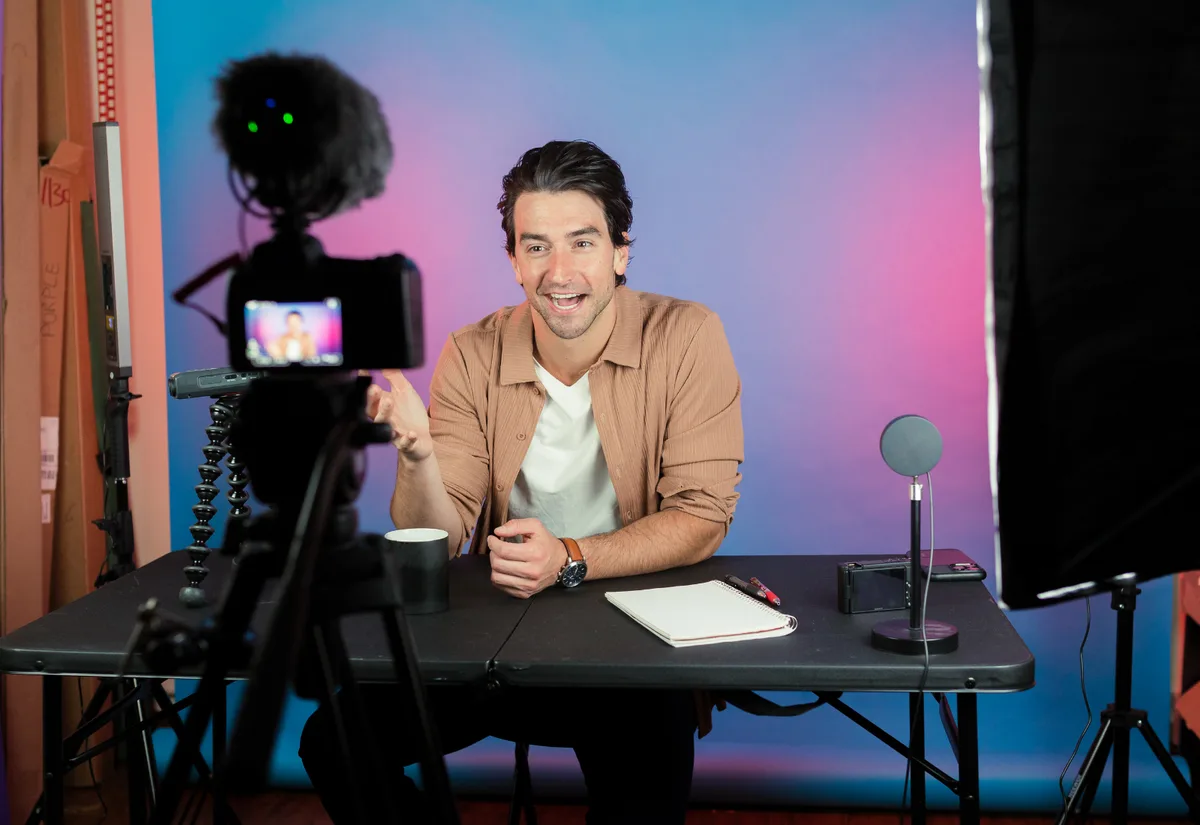
Managing influencer marketing manually works at low scale. At 5 creators or fewer, you can manage outreach in a spreadsheet, track content via email, and process payments individually.
Above 10 creators, the manual workflow breaks down. Outreach at scale takes days. Contracts and compliance become a tracking problem. Payment processing and tax documentation for dozens of creators is a part-time job. And without per-creator tracking, you cannot tell which creators are actually driving performance.
This is where a platform changes the math.
Creator.co automates the four most time-consuming parts of influencer marketing: finding creators (with filters by niche, tier, engagement rate, and geography), sending personalized outreach, managing approvals and deliverables, and tracking performance. The platform holds a database of 270,000 registered creators on platform plus 400 million creator profiles for discovery.
Groupon used Creator.co to recruit and activate 800 creators during Q4, generating 3.7 million views and 1,192 pieces of content across the campaign, nearly double the original 600-piece target. The Groupon team attributed that scale to the platform's bulk outreach tools and automated message sequences. Running that campaign manually would have been impossible at that speed.
Creator.co holds a G2 Leader badge (Spring 2026), with 10,000+ brand campaigns run across every creator tier and category.
When a platform makes sense: any campaign with 10 or more creators, any brand running campaigns on a recurring basis, or any team without a dedicated influencer marketing coordinator.
Influencer marketing mistakes brands make (and how to avoid them)
Most campaign failures trace back to one of six patterns.
Chasing follower count over engagement rate. A creator with 500,000 followers and a 0.5% engagement rate reaches fewer real people than a creator with 50,000 followers and a 4% engagement rate. Always evaluate engagement alongside reach. Vague briefs. If the brief does not specify the product benefit to highlight, the tone, and the required disclosures, creators fill the gaps with generic content. Specificity in the brief produces specificity in the content. Matching tier to budget instead of goal. New brands often allocate budget to a single macro creator because the follower count looks impressive. Macro creators are awareness tools. If the goal is conversions, that budget is better split across 10 to 15 micro-creators. Expecting immediate sales from awareness campaigns. New brands commonly underestimate the time required to build recognition. A campaign that reaches 500,000 new people will not produce the same sales as a conversion campaign targeting warm audiences. Awareness drives consideration, which drives sales over time. They are different phases, not failures. One-off campaigns instead of always-on programs. A single campaign post creates a moment. An always-on ambassador program builds a brand. The brands that see compounding returns from influencer marketing treat it as a relationship channel, not a transaction. Skipping the vetting step. Fake followers, engagement pods, and creators with predominantly sponsored feeds are detectable before you pay them. Three to five minutes of profile review per creator prevents wasted spend on audiences that do not exist.Getting started with influencer marketing
Influencer marketing is a channel that rewards consistency, specificity, and data-driven decisions. Define your goal before you pick a creator. Match the tier to what you are trying to achieve. Brief clearly. Measure the right metrics. And if you are running campaigns at scale, use the infrastructure that lets your team focus on strategy instead of spreadsheets.
Creator.co gives brands access to 270,000 registered creators, AI-powered discovery across 400 million profiles, built-in campaign management, and the affiliate and performance tracking needed to connect creator content to real business outcomes.
Ready to run your first campaign?
Creator.co gives brands access to 270,000 registered creators, built-in campaign management, and performance tracking in one place.
Start your campaign